
Tag Archives: Chicago Cubs

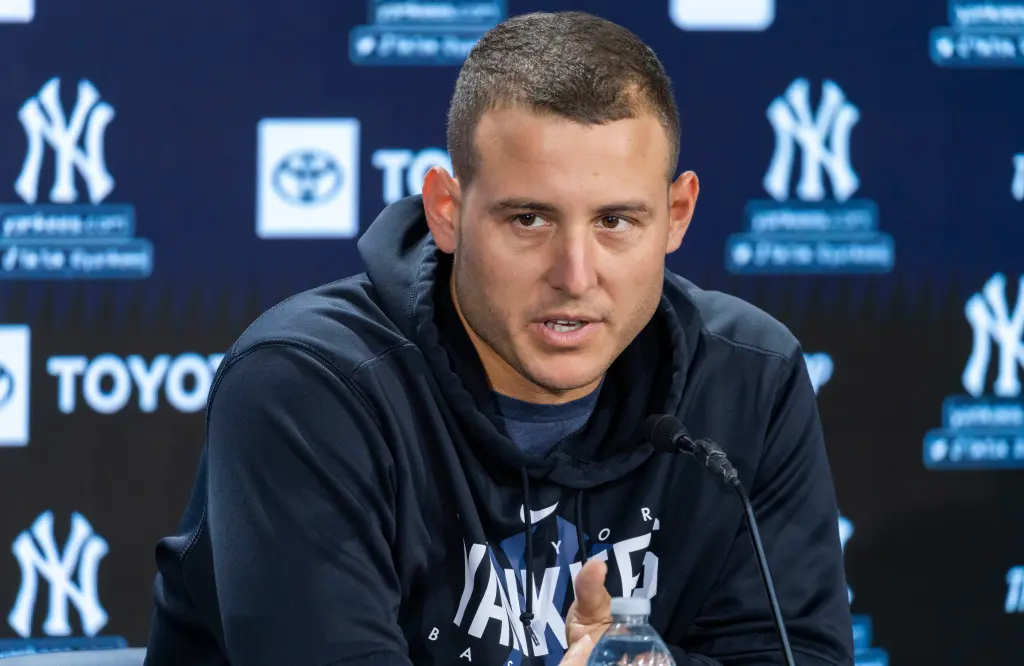
Anthony Rizzo chose his words carefully.

Gordon Wittenmyer

Reds beat writer for Cincinnati Enquirer, co-host Cubs #ReKap podcast; formerly with Chicago Sun-Times. @GDubMLB

NEW YORK — Anthony Rizzo chose his words carefully.

The All-Star slugger who was the face of the Chicago Cubs for arguably their greatest six-year run in history — the one who many Cubs loyalists believe still should be the face of the franchise — was asked after three years in New York Yankee pinstripes to assess the difference between the two big-market operations.

“Not much of a difference,” Rizzo said with a straight face. “Pretty much when I was in Chicago it was all building toward winning, and here it’s all built to win.”

His very surroundings belied his words as he spoke in the Yankees clubhouse in the Bronx during this recent conversation, his locker next to $300 million slugger Giancarlo Stanton, a few spots from $360 million Aaron Judge and the man expected to be baseball’s next $300 million (maybe $400 million) player this winter, Juan Soto.

In fact, the processes, effort and demands from the highest parts of the two organizations are so dissimilar that consternation simmers in New York over the continued playing time of Alex Verdugo and its half-game deficit to the Baltimore Orioles for the best record in the American League as it opened a weekend series at Wrigley Field — all but assured of its 25th postseason appearance in 30 years.

The Cubs and our resident big fan, David Kaplan, meanwhile, were getting their hopes stirred up again over that recent six-game winnings streak that put them over .500 for the first time since May and had them at a mere four-game deficit in the wild-card standings for what would be a first playoff berth since that 60-game schedule during the pandemic season prevented them from fully blowing an early division lead.

“I mean, it’s what the Yankees have always done, right, my entire life, since I was born,” Rizzo acknowledged of the big-ticket stars in his clubhouse. “To be a part of it and see them paying Judge, bringing in Soto, [$162 million pitcher] Carlos Rodon — those contracts — is nice. It’s guys that have worked hard for it.

“But as far as the difference in baseball and operations, it’s pretty similar.”

Rizzo still has several former teammates and pals in the Cubs clubhouse as he returns to Wrigley for the first time since the emotional 20-hours in the summer of 2021 when Cubs president Jed Hoyer blew up the 2016 World Series core and traded Rizzo, Kris Bryant and Javy Baez.

Demonstrating the kind of tact and diplomacy that made him a go-to frontman for media with the Cubs, Rizzo again chose words carefully to another question about those buddies.

“Do I feel for them?” he said, repeating the question. “I want my friends to do well, so … But at the end of the day they’re playing major league baseball, so. …”

As for whether Craig Counsell has proven or disproven the wisdom of Hoyer’s kneecapping of another Rizzo friend, former manager David Ross, Rizzo acknowledged long-time respect for Counsell and the “shock in the baseball world” of that whiplash, $40 million change in managers.

“It’s a cruel business. That’s what it is,” Rizzo said. “Rossy’s a good friend. You take that out of it, and just look at the business aspect — it’s a cruel business.”

Also, he added, “You can’t look at one year to see if it’s going to make a difference.”

Rizzo, who was the first and lasting cornerstone of that 2015-2020 run for the Cubs that produced nothing but winning seasons, five postseason berths and the franchise’s first World Series title in 108 years.

He’ll forever be remembered and beloved by Chicago Cubs fans, even as he has become a fan favorite of the team his family from New Jersey rooted for as he grew up.

But anyone looking at these two franchises and what they demand from their front office and field bosses, what they demand from their players and how they treat their fans can judge for themselves.

As in Aaron Judge.

And Gerrit Cole. And Soto. And Rodon. And Stanton.

And, yes Rizzo.

Why Chicago Cubs can’t blame failings on manager this time around

Gordon Wittenmyer

Reds beat writer for Cincinnati Enquirer, co-host Cubs #ReKap podcast; formerly with Chicago Sun-Times. @GDubMLB

During a recent conversation about long-term contract extensions for young players, a baseball insider on the player-relations side of the business mused about how much potential earnings some of those players give up.

In other words, they all tend to be bad contracts.

What about David Bote, the insider was asked, eliciting a pause.

“My point is that for a bad player, extensions work out great,” the insider said. “How many teams offer bad players extensions?”

Whether that was an intentional reference to the Cubs and then-president Theo Epstein, it’s at least an illustration, by extension, of where the Cubs find themselves with one of the most underperforming payrolls in baseball.

With all due respect to Bote, maybe he’ll deliver in a big way on his 2018 rookie promise and contribute to a playoff run. Maybe he’ll at least help stabilize the Cubs’ far-too-troublesome third base issues.

But if his callup Sunday for the first time since he and his $15 million contract were waived off the 40-man roster in 2022 wa considered an answer for these Cubs this year, then Epstein’s successor, Jed Hoyer, has a lot more pressing questions to answer before he’s done.

And that might be sooner rather than later at this rate, if ownership decides to demonstrate the spine to start holding executives accountable, like they’ve promised they do for more than a decade.

And that’s the point for a team that needed late-inning comebacks to survive both byes this week against the awful White Sox and claw back to .500 with 100 games to play.

A team that is supposed to be a playoff team. In a season measured by million-dollar promises and a $230 million payroll.

Promises measured by the lofty prices charged to a fan base still looking for its first playoff win in eight years — its first playoff appearance without the help of a pandemic-shortened season in six.

And counting.

As in tick, tock and Oh-fer Jed.

Until those comebacks against one of the worst teams in major league history the Cubs hadn’t won a series in the last six tries, which raised the obvious question about whether they might be forced to consider selling at the trade deadline if it continued much longer.

But that’s the thing.

As esteemed beat man Patrick Mooney, the longest tenured writer on the Cubs beat, pointed out in a piece this week, that’s almost as impossible as it is undesirable for Hoyer and his front office team — because of the low value/high salaries of some of the would-be selloff pieces and greater value to the team long-term of the handful of club-controlled players with high trade value.

It’s not the most enviable position for any executive to face this time of year with a club that could go either way in June — much less the big-market, Chicago freaking Cubs, who must demonstrate at least incremental progress over last year’s near miss of the playoffs to keep selling their not-quite-all-in, eye-on-an-undetermined-future plan for winning in October.

On the eve of the Sox series Hoyer pointed out that until that monthlong skid, the Cubs had a good April in which they scored more runs than recent weeks and were among the league’s offensive team leaders (if still suffering from bullpen deficits).

“So I do believe we’ve already shown that it’s in there,” Hoyer said in Mooney’s piece in The Athletic. “It’s just a matter of getting it out. So, yeah, I expect us to play better.”

Obviously, that’s about all he can do or say at this point.

That and add some of the help at the deadline that we all knew this team needed during the winter and didn’t get.

Specifically, bullpen help. And, sure, go get slugger Pete Alonso from the Mets if you’re willing to outbid the four or five (or more) other teams that figure to pursue him seriously.

This is the second year in a row Hoyer and GM Carter Hawkins whiffed on putting together a playoff-caliber bullpen (turns out even a $40 million manager can’t fix ugly).

And rolling essentially the same team out there in 2024 that won 83 games in 2023 has them on pace for *checks math on .500 record* two fewer wins.

They have one more chance in a trade market that figures to be furious and fraught with high prices. Last year’s market told us that much. And this year’s vast array of middleweight, would-be contenders for that recently expanded playoff field suggest the prices might be higher than last year.

They have to pay the price this year. They have to do better than Jose Cuas this time.

If it helps spur a more aggressive approach than the risk-averse Hoyer’s track record suggests, then maybe they can think of guys like Ben Brown (for David Robertson) and Hayden Wesneski (Scott Effross) as recent trade-deadline wins in the bank from when they were selling their own veteran relievers for prospects.

But the spotlight is on Hoyer. And the pressure should be, too.

If the Cubs fall short in September because the front office doesn’t get the job done in July, it’s hard to imagine spinning a sales pitch that makes another close call down the stretch sound reasonable. Or acceptable.

Not to the fans. And maybe this time not even to an ownership that has been complicit with the not-quite-all-in, cash-conscious approach since the pandemic and their ill-timed Marquee Network launch.

It’s long past time for better results. October results.

Hoyer and Epstein combined to fire five managers in the 13 years since taking over Cubs baseball operations.

They can’t blame it on the manager this year if they don’t reach expectations. Hell, even if Craig Counsell did screw it up, that would be on the guy who was so eager to give him biggest manager contract in history that the Cubs are paying two managers this year.

So Hoyer should be acting in the next several weeks like his job depends on his trade-deadline performance.

Because it should.

How Chicago Cubs’ Jed Hoyer plans to answer baseball’s long unanswerable question

Gordon Wittenmyer

@GDubMLB

Reds beat writer for Cincinnati Enquirer, co-host Cubs #ReKap podcast; formerly with Chicago Sun-Times.

With Cody Bellinger back, the Cubs are running the same team out in 2024 as the one that fell short in 2023 — and counting on the $40 million manager to make up the difference.

MESA, Arizona — Give credit where $80 million worth of credit is due.

Chicago Cubs president Jed Hoyer got his man when he held out until the final week of February to return free agent Cody Bellinger to the Cubs roster on a deal that guarantees the former MVP the highest annual average value in franchise history.

Which mostly means the boys are back in town for the Cubs home opener April 1 — after a brief detour to Texas to open the season against the defending champs.

It’s not lost on division rivals that the Bellinger signing assured essentially a roster status quo for a team that finished one game short of the playoffs last year.

“It definitely helps them,” said Jonathan India of the Reds. “But it’s the same team from last year.”

And while The Athletic’s Sahadev Sharma had an interesting look through the weeds at the differences between last year’s team and this one, club insiders basically agree with India in private conversations.

With the possible exception of one thing that team president Jed Hoyer mentioned this week in closing as he mentioned the various additions that made him happy with the roster work he was able to do this winter: the new manager.

Even with the Bellinger signing, the most seismic move the Cubs made all winter was unceremoniously kicking manager David Ross to the curb — a month after singing his praises — and signing Craig Counsell to the richest contract for a manager in baseball history (five years, $40 million).

Argue if you like whether unproven free agent Shota Imanaga is an upgrade over 2023 Marcus Stroman in the rotation or whether Hector Neris puts last year’s shaky bullpen over the top in 2024.

On paper, this is not a measurably different team than last year.

For every argument in favor of Neris’ impact, Imanaga’s higher ceiling than Stroman’s or the potential that Michael Busch is better than the collective the Cubs ran out at first base last year, there is an example of a back-nine veteran who’s a year older, a possible concern over Bellinger’s much-maligned soft contact rate late last season and the fingers-crossed concern that one or more guys who stepped up in 2023 (Justin Steele? Adbert Alzolay?) might regress some in 2024.

But wait for it.

Because when it all starts to play out — and certainly when it’s all said and done this year — a lot of the focus on whether the Cubs play better or worse is going to be on the manager making almost as much this season as Imanaga and twice as much as Steele.

And the one who got shafted in November.

In other words, forget pitch labs and hitting labs.

Hoyer has created a manager lab. Or at least created the ideal conditions to stage baseball’s first great manager-value experiment.

Whether it will answer baseball’s long-unanswerable question about just how many wins one manager is worth compared to another, the 2024 Cubs might be as close to an actual scientific laboratory experiment on that subject as anyone could conjure in a real-world, big-league competitive environment.

Counsell is considered by many the best manager in the game — or at least second to Bruce Bochy, who outpaces him 4-0 in rings as a manager.

And for what it’s worth, the imperfect Pythagorean run-differential model for a team’s expected win-loss record, had the ’23 Cubs underperforming by seven wins.

So if the ’24 model is as close to the same team as could be reproduced to run through another 162 games with a different field boss in place?

Well, then, score another high-minded maneuver for today’s smart-guy front offices.

Hoyer may not have actually upgraded the roster of this big-market Cubs team with big-talking plans for October.

But maybe he’ll get an answer on that supposedly unanswerable question, and he and Counsell will reinvent the game — or at least some of its analytics.

For now, consider baseball’s first manager lab open for business in Chicago.